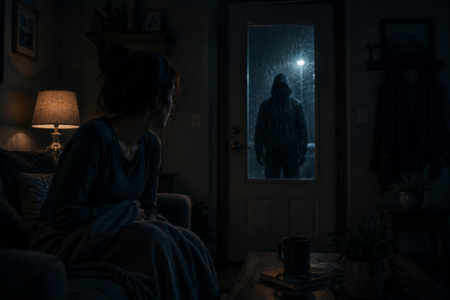


I’ve always thought of marriage as a partnership based on love, respect, trust, and understanding rather than just a relationship between two people. I was mistaken to believe that my spouse would be my closest friend, my biggest supporter, and the one who would always be there for me no matter what. as time exposed a truth that gradually crushed my heart.
Everything seemed lovely when we first got married. My spouse appeared kind, considerate, and affectionate. He inquired for my thoughts, paid attention to the small things that brought me joy, and gave me a sense of importance in his life. But soon after we were married, I began to see that his strong bond with his mother was the other relationship in his life that took precedence over anything else.
I disregarded it at first. I reminded myself that there is nothing wrong with a boy loving his mother. But gradually, that love became something that dominated our marriage, leaving me with less and less room in his life. And that isn’t typical.
Without his mother’s consent, he was unable to make any decisions. He always said, “I need to ask my mother first,” whether I wanted to go somewhere, decorate my house, or discuss our future.
I said nothing at first. Perhaps things would get better with time, I told myself. But just one thing changed with time: how important I was to him.
The day that totally crushed my heart then arrived.
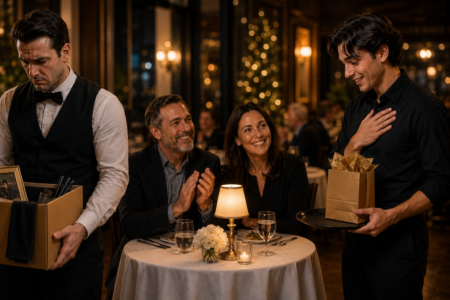
My birthday and his mother’s birthday fell on the same day during the first year of our marriage. Excited and clinging to tiny hopes, I spent the entire day. Since he was my first love, I reasoned that perhaps at midnight he would surprise me, give me a hug, and wish me a happy birthday—or at the very least, make me feel unique and cherished on my special day.
I spent the entire day waiting for him.
My heart was pounding with anticipation as midnight drew near. I smiled to myself as I got ready and continued to watch the time. However, the room was empty when I entered.
Not surprising
Not a gift
No desire
Not a single word of affection
My spouse wasn’t present at all.
To celebrate his mother’s birthday, he had gone out with her. And all he said when he did talk to me was:
“Once the cleaning is done, we must accompany Mom.”
At that moment, something inside of me broke.
I recognized for the first time that I would always be the second most important person in his life. He didn’t care about my pleasure, feelings, or desires; his mother was the only thing that really mattered to him, and I had no place in their relationship.
It wasn’t a single evening either. It was the harsh truth of our whole marriage.
I began to perceive everything from a different perspective after that. His mother was at the center of every choice, disagreement, and joyful occasion. His response was the same every time I attempted to communicate my emotions:
“Mom says.”
I made numerous attempts to clarify that our marriage’s lack of boundaries was the problem, not his love for his mother. He never took me seriously, even though I wanted him to put our lives together as husband and wife first.
When I told him how terribly upset I was one day, he laughed and said:
“You must acknowledge that my mother is the most significant woman in my life.”
I recognized then that I was engaged in a fight I would never be able to win.
I was worn out.
Weary of losing my individuality, repressing my urges, and feeling inferior all the time.
I sobbed through many nights and wondered:
Is this true love?
Does a woman in a marriage always have to give up herself?
Is silence the same as peace?
I eventually made the decision to be myself.

I came to the conclusion that I could not live my entire life in a bad partnership. I can’t ruin my life in this way, where I was never really appreciated. Making that choice wasn’t simple. I knew that if I didn’t defend myself now, I would lose myself forever, even if my heart was broken and the memories were still painful.
I thus requested a divorce.
After being startled, he burst out laughing. Perhaps he didn’t think I would do it. However, I had finally broken my silence this time.
Although the divorce was traumatic, there was an odd sense of calm that accompanied the suffering. I felt liberated for the first time. I was no longer ignoring myself, and most importantly, I could choose my own happiness and make decisions for my own life.
I’ve discovered one crucial thing today:
Being in love does not imply forgetting who you are.

Love entails treating each other with respect, understanding one another, and appreciating one another’s emotions.
Sometimes ending a relationship becomes your greatest freedom rather than the worst loss of your life.