
The First Knock
The first knock came on a Tuesday.
Three sharp knocks.
Knock.
Knock.
Knock.
Eleanor Hayes opened her eyes and glanced toward the digital clock beside her bed.
3:17 AM
She frowned.
Who visits anyone at that hour?
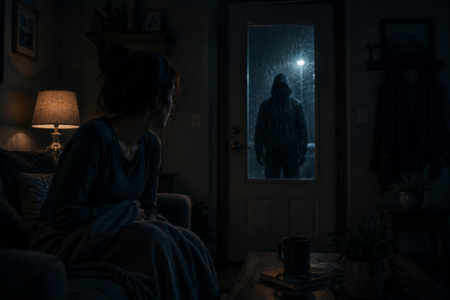
Pulling on her robe, the thirty-four-year-old journalist walked downstairs in her small townhouse in Manchester.
She opened the door.
Nobody.
The street outside was empty.
Rainwater reflected the glow of street lamps.
Not a single person in sight.
She locked the door and returned to bed.
The following night, it happened again.
Three knocks.
Exactly at 3:17 AM.
Again, nobody was there.
Twenty-Seven Nights
By the tenth night, Eleanor stopped sleeping properly.
By the fifteenth night, she stopped answering the door.
By the twentieth, she installed cameras.
The footage showed something impossible.
At exactly 3:17 AM, the camera recorded the sound of knocking.
But nobody appeared on screen.
No person.
No shadow.
Nothing.
The police dismissed it immediately.
“It’s probably teenagers playing games,” said Officer Daniel Reeves.
Eleanor pushed the laptop toward him.
“Then show me the teenagers.”
Daniel watched the footage twice.
Then a third time.
The knocking was unmistakable.
Yet the porch remained empty.
For the first time, the officer looked uncomfortable.
The History of Number 14
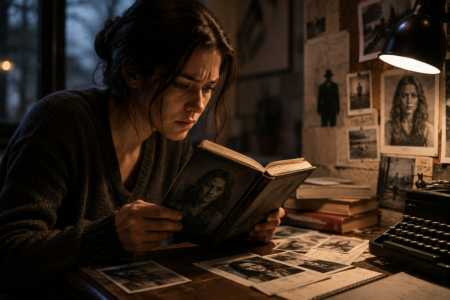
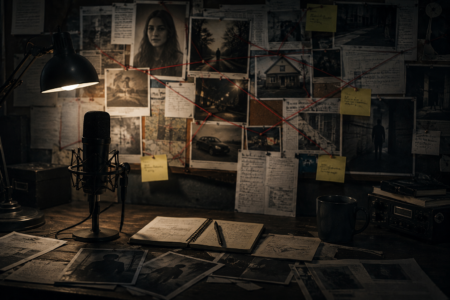
Unable to sleep, Eleanor began researching the history of her house.
Number 14 Ashcroft Lane had stood for almost seventy years.
Most owners stayed only a few years.
Nothing unusual.
Until she reached an article dated October 2009.
The headline froze her.
LOCAL UNIVERSITY STUDENT VANISHES WITHOUT A TRACE
The missing student’s name was Olivia Bennett.
Age twenty-one.
Last seen returning home after working a late shift.
Address:
14 Ashcroft Lane.
Eleanor stared at the screen.
Her house.
The Missing Girl
The case had shocked Manchester.
Olivia Bennett disappeared on November 14th, 2009.
Police found her handbag inside the house.
Her keys remained on the kitchen table.
Her phone was discovered upstairs beside her bed.
There were no signs of forced entry.
No struggle.
No evidence.
It was as if she had simply vanished into thin air.
The case went cold within a year.
Eleanor noticed something else.
Olivia disappeared at approximately…
3:17 AM.
The Twenty-Eighth Knock
That night Eleanor waited downstairs with all the lights on.
3:14 AM.
3:15 AM.
3:16 AM.
Silence.
Then—
Knock.
Knock.
Knock.
Exactly three times.
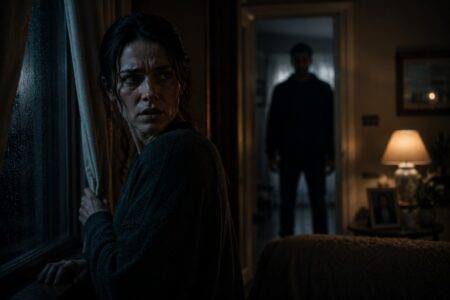
The sound came from the front door.
But this time it was followed by something else.
A sound from upstairs.
Footsteps.
Eleanor grabbed her phone and climbed the stairs.
The footsteps stopped outside the attic.
The attic door stood slightly open.
She was certain she had closed it earlier.
The Name in the Wall
Inside the attic she noticed scratches on the wooden floor.
One loose floorboard moved beneath her foot.
Underneath was a small metal box.
Inside were photographs.
Letters.
And a silver necklace engraved with a name.
Olivia Bennett.
Eleanor’s hands began shaking.
There was also a folded piece of paper.
Only four words were written on it.
“He lived next door.”
The Neighbor
The police reopened the case immediately.
Detective Sarah Mitchell led the investigation.
“Who lived next door in 2009?” Eleanor asked.
Sarah looked at the file.
“Arthur Graves.”
“Still alive?”
Sarah nodded slowly.
“Still living there.”
Arthur Graves was seventy-one years old.
A retired electrician.
Quiet.
Polite.
The kind of neighbor nobody ever questioned.
The Interview
Detectives visited Arthur the following morning.
He welcomed them inside calmly.
“Olivia Bennett?” he said.
“I remember the poor girl.”
Sarah placed the necklace on the table.
His expression changed instantly.
Only for a second.
But detectives noticed.
“Where did you find this?”
Arthur’s hands trembled.
“In your former neighbor’s attic.”
Silence.
Then Arthur smiled nervously.
“I’ve never seen it before.”
The Basement
Police obtained a warrant.
Arthur’s home revealed nothing unusual.
Until officers entered the basement.
Fresh concrete covered one section of the floor.
Detective Mitchell stared at it.
“When was this poured?”
Arthur avoided eye contact.
“I don’t remember.”
The forensic team broke through the concrete.
An hour later, the entire room fell silent.
Human remains.
Female.
Approximately fifteen years old.
Alongside the remains was Olivia Bennett’s university ID card.
The Truth
Arthur Graves confessed two days later.
On the night Olivia disappeared, she had discovered him breaking into empty houses on the street.
She threatened to call the police.
He panicked.
He invited her inside to “talk.”
She never left.
For fifteen years he lived beside the family searching for her.
For fifteen years he attended community vigils.
For fifteen years he pretended to hope she would come home.
The Question Nobody Could Answer
The media wanted answers.
So did detectives.
So did Eleanor.
How had the necklace ended up inside her attic?
Who moved the floorboard?
Who wrote the note?
Who knocked on the door every night at exactly 3:17 AM?
Arthur denied ever entering Eleanor’s house.
Forensics confirmed there were no fingerprints except Eleanor’s own.
The handwriting matched nobody connected to the case.
There was no explanation.
Officially, the mystery remained unsolved.
One Final Knock
Three months later, Eleanor prepared to move out.
As movers loaded the final boxes into the van, she walked through the empty house one last time.
Then she heard it.
Three knocks.
Knock.
Knock.
Knock.
She looked at her watch.
3:17 PM.
Not AM.
PM.
For the first time.
Eleanor opened the door immediately.
The street was empty.
But something lay on the doorstep.
A newspaper clipping.
The headline read:
MISSING STUDENT’S FAMILY FINALLY GETS ANSWERS AFTER FIFTEEN YEARS
On the back, written in blue ink, were four words.
“Thank you for opening the door.”
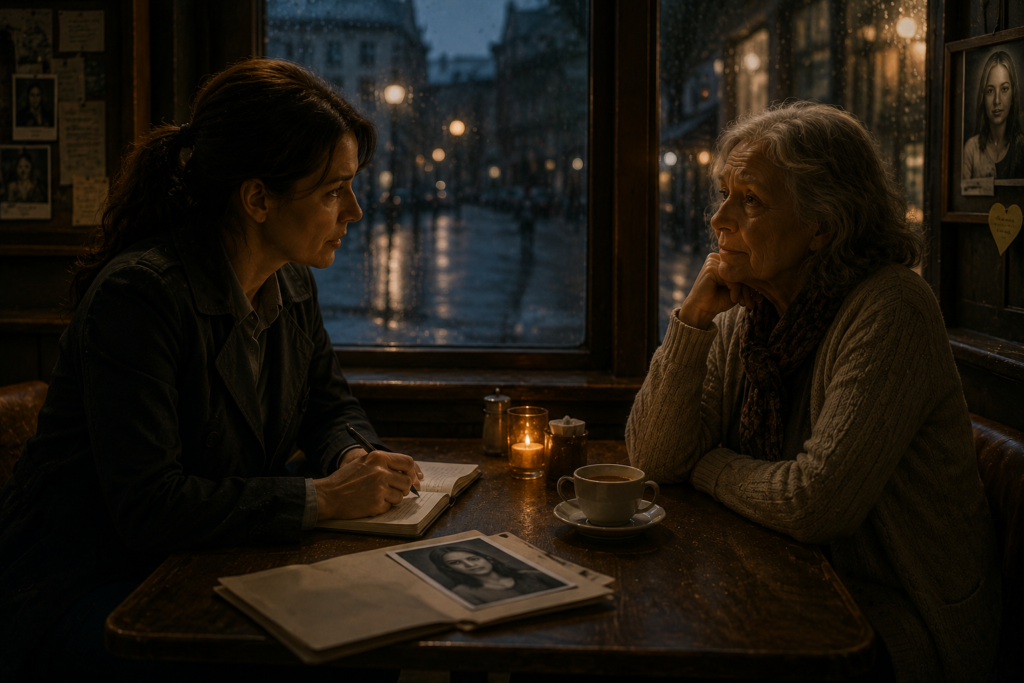
Months later, Detective Sarah Mitchell asked Eleanor the question everyone wanted answered.
“Do you believe in ghosts?”
Eleanor looked out of the café window.
Then she smiled slightly.
“I don’t know.”
She paused.
“But I know this.”
“Sometimes the dead aren’t asking us to fear them.”
“They’re asking us not to forget them.”
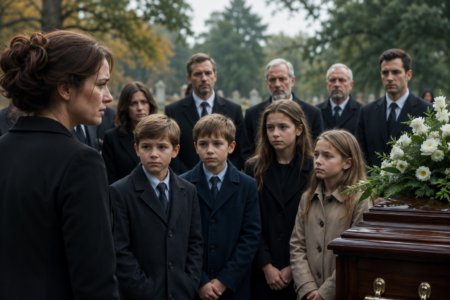
And somewhere in Manchester, a mother who had spent fifteen years waiting beside a silent telephone finally had a grave to visit.
Some mysteries end with answers.
The hardest ones end with names.
Because closure does not begin when a case is solved.
It begins when someone finally comes home.